Showing posts with label Supercars. Show all posts

Wednesday, February 24, 2010

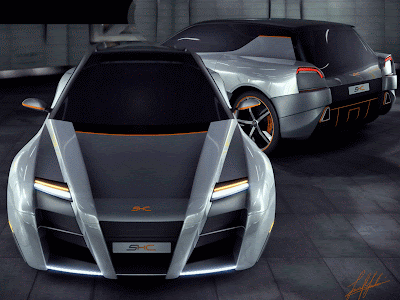
2010 Super Hatchback Concept Car by Jamie Martin

Details on a possible future eco-friendly model, called SHC (Super Hatchback Concept), were revealed by designer Jamie Martin, a UK based designer whose previous works include the Cobra Venom V8 concept and the London Navigator bus. The SHC was conceived out of a desire to fuse the two very different worlds of hatchbacks and supercars. And in a world where limiting CO2 output is becoming increasingly important, the SHC also has some green tech up its sleeve.
2010 Super Hatchback Concept Car by Jamie Martin 
Designed to compete against the likes of the Honda Civic Type-R and Ford Focus RS, the SHC would be offered with a choice of two different engine/transmission packages.
It has similarities to both a supercar and a 3-door hatchback and boasts of both styling and performance characteristics. The concept car is available in a choice of three next generation powertrains, including an electric / hybrid option. Interestingly, the body is composed of 65% Steel and 35% aluminum used for front wings, bonnet & bumpers. Alternatively, 30% glass reinforced plastic can be used for designated sections. 
2010 Super Hatchback Concept Car by Jamie Martin 
Other features include front and rear window ‘air-streams’, combined with hydrophobic and super-fast screen heating and high-intensity LED/Single-Source fiber-optic illumination used on the headlight wing, lower fog light, and rear lights. Martin describes the car to have a â€Å“balanced formula of raw power, racing spirit, practicality and eco engine choices.” He said that this means that you have a supercar-inspired drive to use for weekly shopping.
2010 Super Hatchback Concept Car by Jamie Martin 
The first proposed powertrain of the concept consists of a twin-turbocharged internal combustion engine with direct injection, stop-start technology and regenerative braking. Transmission would be via a 6-Speed Short-Shift manual gearbox or a 7-speed paddleshift auto.
2010 Super Hatchback Concept Car by Jamie Martin 
The second option is a system dubbed the 'Delta Drive Hybrid (DDH)'. This setup consists of a smaller displacement internal combustion engine and a pair of electric motors. Nano-Titanate batteries located in the engine bay, and under the floor would feed power to the high-torque electric motors mounted within the front wheels. 3-performance modes would be available: Economy (low bhp town driving), Normal (medium bhp - motorway driving), and Performance (high bhp - utilising both the petrol engine and electric generator together for ultimate power). The car could also be driven in full electric mode for around 70 miles before the engine was needed to recharge the batteries.
2010 Super Hatchback Concept Car by Jamie Martin 
Further highlights of the SHC include a magnetorheological fluid suspension system with Normal, Sport & Track modes. This system, first used by Ferrari, features dampers with iron filings suspended in fluid. When an electrical current is passed through the fluid it instantaneously changes the damping rate and stiffens up the suspension.
2010 Super Hatchback Concept Car by Jamie Martin 
While the SHC is just an independent concept with no intention of production, it does seem more and more likely that hybrid technology will filter very quickly into performance vehicles - and hot hatches could be one of the first segments to make the switch.

Friday, January 8, 2010

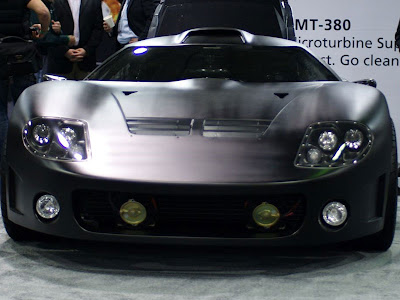
Capstone Supercar CMT-380 the high performance hybrid electric microturbine vehicle Debut at LA Auto Show

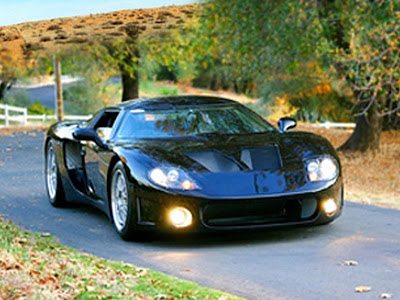
Capstone Supercar CMT-380

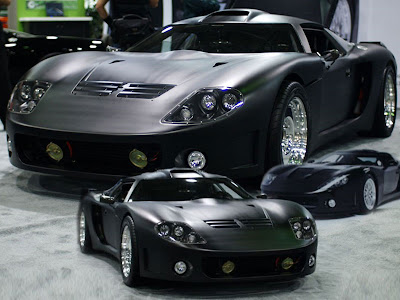
The Capstone CMT-380 was the surprise basement find of the LA Auto Show.The Capstone CMT-380 is essentially a prototype show car designed to highlight the technology and products available from Capstone Turbine Corporation. The concept for the high performance hybrid electric microturbine vehicle was developed by Electronic Arts (EA) Chief Creative Director Richard Hilleman.
Capstone Supercar CMT-380

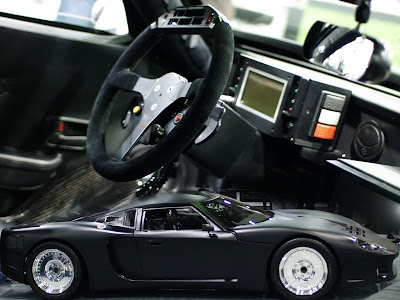
After working on the car for four years, inventor Richard Hilleman was the man of the hour as he fielded questions about his unusual microturbine-lithium-ion hybrid powertrain fitted to a GTM Supercar kit body. It may still be in the test phase, but Capstone claims that the car can reach a top speed of 150mph, and is able to sprint from zero to 60mph in just 3.9 seconds.
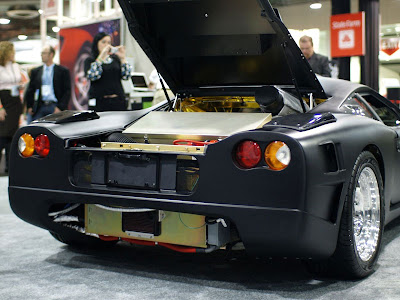
The CMT-380 features an unusual hybrid drivetrain which uses one of Capstone's new C30 (30-kilowatt) microturbine engines to extend the range of the primarily electric powered vehicle. The turbine can be run on either diesel or biodiesel.
Capstone Supercar CMT-380

The CMT-380 features lithium-polymer battery cells that can be charged at home or at a public recharging station. While driving, the CMT-380 can operate on 100 percent battery power in zero emissions mode for a range of up to 80 miles. When the batteries reach a predetermined state of discharge, the Capstone C30 microturbine quietly fires up and recharges the batteries on the fly to extend the driving range up to 500 miles. The diesel fueled C30 microturbine requires less maintenance than traditional combustion engines and produces ultra-low exhaust emissions. Hilleman has owned an electric vehicle – a converted Porsche 550 Spyder – for at 15 years and has constantly upgraded it. The EV used to have just 30 hp with lead acids but now uses lithium ferrous batteries and has 200 hp. The 100-mile range hasn't changed, though, and so he knew it was time to build a hybrid. He decided on Capstone's diesel microturbines as the range extender.
Capstone Supercar CMT-380

He knew he could rely on them – they've been used in buses for years – but there was still the challenge of fitting the unit into a car like this. Hilleman built the CMT-380 just for himself, but Capstone is happy to show it off as a proof of concept vehicle. It would be too pricey to put into mass production (Hilleman estimated he put in about $375,000 hours of work), but it's not impossible that a high-end, expensive, limited production run could be made some day.
Capstone Supercar CMT-380

Right now, Hilleman is really happy with his creation. He especially loves the sound of the vehicle. Three feet to the side of the car, the microturbine puts out about 87 dB, but in the cabin, it's nearly silent. California law might require him to add a muffler, but it's already quiet enough without one. He's got a solution for that problem, should he need it.
The chassis and bodywork of the Capstone CMT-380 are borrowed from the Factory Five GTM kit sports car, and modified to accept the hybrid drivetrain.
Capstone Supercar CMT-380

"Capstone's CMT-380 is just now finishing up the conceptual design and first article testing stage," said Darren Jamison, Capstone President and CEO. "We plan to finalize very soon a limited production plan, in part, based on interest received at the [2009] LA Auto Show. We anticipate customers will be a select group of individuals who appreciate its many innovative high-performance and high-technology driving characteristics, long driving range and ultra-low emissions," added Jamison.

Saturday, December 26, 2009

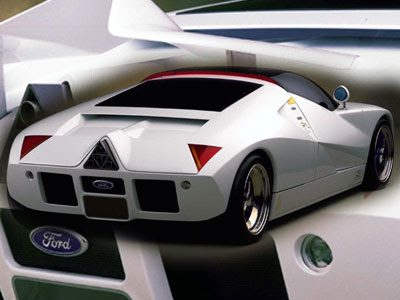
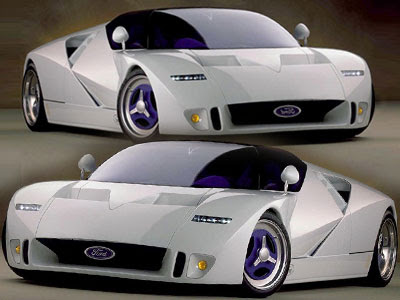
2010 Ford GT90 Super Sport Car Concept going to auction

2010 Ford GT90 Super Sport Car Concept

If Ford first introduced the GT90 Concept at the 2010 Detroit Auto Show next month, it would still be one of the most eyecatching cars on the show floor. What's amazing is that Ford unveiled the GT40 successor nearly 15 years ago. What's more, even by today's standards it's still a supercar among supercars.
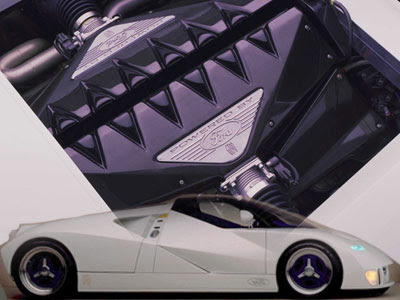
The quad-turbocharged 6.0-litre V12 puts out an estimated 720 horsepower, the body is constructed completely of carbon fiber and top speed is somewhere in the 400 kph range. The only hints that it's not a modern supercar are the all-blue interior and wheels that look dated now.
So what's all the fuss about the GT90 Concept now? RM Auctions in the States has just announced that it will be offering the concept car at its upcoming Arizona sale. That's right, this is your chance to own one of the coolest concept vehicles of all time. This is the first time that the GT90 Concept has ever been publicly for sale at auction, and RM claims that it is in "excellent running condition, having been properly stored and maintained over the year." No estimated on price is given, but we're guessing it will take a large suitcase of cash to take the car home.
2010 Ford GT90 Super Sport Car Concept

The one-off GT90 Concept Car, labeled immediately as "the world's mightiest supercar" by Ford Motor Company on December 6, 1994, was the spiritual successor to the Ford GT40, the product of a colossal feud in the early 1960s between the Blue Oval from Dearborn and the Prancing Horse of Northern Italy. The GT90 draws from the design cues of its heritage and pays homage to the famed Le Mans-winning Ford GT40s of the 1960s, which were created after the failed attempt by Ford to buy out Ferrari.
At a development cost in the neighborhood of $3 million, the GT90 was certainly worthy of pulling styling cues from the original Ford GTs, and although it was never meant for production, it was built according to a Ford press release as a "test bed for technology, engineering and design concepts, and driver-oriented features that eventually may be used in Ford production vehicles."
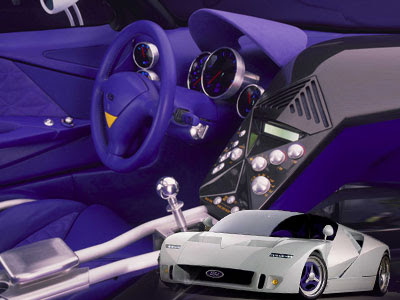
Officially unveiled to the public in January 1995 at the Detroit Auto Show, the GT90 is finished in bright white with a bright blue and carbon fiber interior. It features a mid engine quad-turbocharged V12 that produces an estimated 720 horsepower and 660 pound-feet of torque. As a result, it had a claimed top speed of 253 mph, which even by today's standards would make it one of the fastest production cars in the world – faster even than a McLaren F1, which was widely considered the world's preeminent supercar at the time.
2010 Ford GT90 Super Sport Car Concept

The engine, which was a 48-valve six-liter V12, had to be combined together with four Garrett Systems T2 turbochargers in order to reach its estimated 720 horsepower and was based on the Ford Modular engine. Created by using parts of two Lincoln V8 engines, engineers removed the last pair of cylinders from the rear of one engine and the first pair of cylinders from the front of the other engine. The cut-down engines were then welded together with the final result being a 90-degree V12, which utilized a 90.2 mm bore and a 77.3 mm stroke to achieve maximum power.
The GT90 features the FFD-Ricardo five-speed manual gearbox found on the XJ220 and, considering the torque load that it is designed to handle, is noted as having a relatively light shift quality. Also borrowed from the XJ220 comes the all around double wishbone suspension that was designed to enable the car to handle well at top speeds.
2010 Ford GT90 Super Sport Car Concept

Using Ford's new "Edge" design philosophy, the car incorporated advanced technology with a mixture of flat planes, angles, glass and triangular shapes that seemingly all collided together. The GT90 was the first car created using this new styling directive from Ford, which went on to be responsible for the creation of other Ford products like the Ka and Cougar. The effect is most impressive and a wonderfully executed stylistic throwback to its GT40 predecessor, which at once stays true to its heritage but acknowledges the advances in modern design. Taken directly from race car technology, the GT90 body panels are molded out of carbon fiber while the chassis is formed out of a honey-comb sectioned aluminum monocoque.
The GT90 is a test bed of advanced technology and design. It sports a tinted, laminated glass bubble over the cockpit and a spoiler that rises off the rear deck at high speeds. According to Ford, it has a "design that tightly enclosed its mechanicals with no wasted space; high tech lighting and blind-spot detection systems; and tiles like those on the space shuttle to shield the V12's exhaust outlets."
2010 Ford GT90 Super Sport Car Concept

After its unveiling in Detroit, the GT90 made its rounds on the Auto Show Circuit in 1995, traveling around the world to Frankfurt and as far away as Tokyo. With few other showings in between, the car recently was shipped over to Europe to be on display in the Ford of Europe 2008 exhibit at the Goodwood Festival of Speed. After returning home, the car was shipped to Alabama where it was on display as part of the Mustang 45th Anniversary Celebration.
This superb concept car remains in excellent running condition, having been properly stored and maintained over the years in between its show appearances. RM Auctions is proud to publicly offer the GT90 for the first time ever at auction. A remarkable one-off piece of automotive history and cutting-edge design, its offering may very well be a once in a lifetime opportunity for Ford devotees and concept car enthusiasts.

Monday, December 14, 2009

2010 The Zenvo ST1 Super Sports Car By Danish Design

2010 The Zenvo ST1

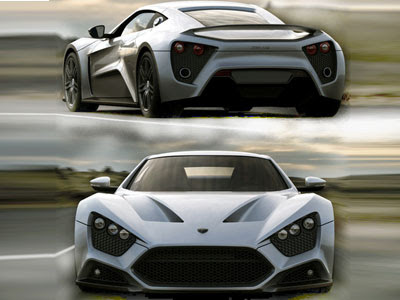
Fledgling Danish supercar manufacturer Zenvo has just released the first official images and final details for the ST1, a brand new supercar from a brand new manufacturer that will join the ranks of the automotive world's elite should it make its production date of early next year. The Zenvo ST1, on paper, looks to compete with the likes of Pagani, Koenigsegg, SSC and Bugatti for the fastest and meanest cars in the world. Probably most expensive as well, though no base price information has been released as of yet.
2010 The Zenvo ST1

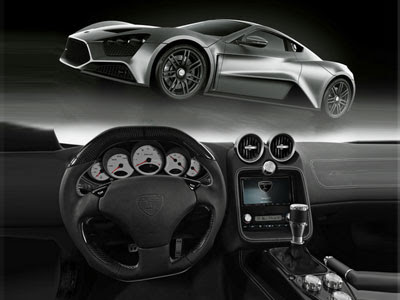
Zenvo ST1 is a real supercar with excessive power supplied from a V8 engine with both supercharger and turbo. Zenvo ST1 has 1.104 BHP and 1.430 NM
The car is 100% Danish design. Danish design has always been cutting edge design, but this is the first Danish designed supercar.
At the Zenvo ST1's heart is mysterious 7.0 liter V8 that is rumored to be based on a GM crate motor. The big-displacement V8 is both turbocharged and supercharged, giving the ST1 a power output of 1,104 bhp and 1,055 ft-lb. of torque. In case you were wondering, that puts the Zenvo ST1 power numbers greater than those of the Bugatti Veyron.

2010 The Zenvo ST1

With an electronically limited 233 mph top speed, the ST1 won't be breaking any production land speed records, though. Presumably Zenvo threw the governer into the equation to simplify safety and aerodynamic precautions, as one 200+ mph speeds are reached, stress on tires and body components increases very quickly.
The design brief from the Zenvo creators to the designers at hermann & brandt design consultancy was to design a supercar that looked like no other supercar. The design had to be aggressive mixing supercar styling with race car elements.
2010 The Zenvo ST1

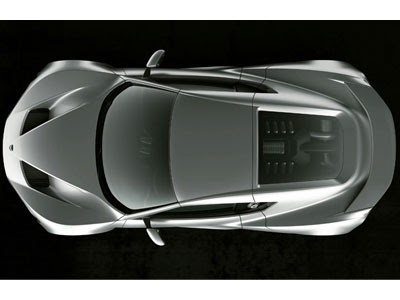
The design of the Zenvo ST1 is made from free flowing accelerating lines creating the shape of the wheel arches, the roof line, side line and the lower side air intake. The sharp lines are connected by muscular organic surfacing creating dramatic reflections. Contrasting the general surfacing the design features a race car inspired lower carbon splitter.
The front of the Zenvo ST1 is designed around the hexagonal trademark Zenvo grille flanked by the large front air intakes used for brakes and engine cooling. The intakes are raked back to minimize drag and at the same time making the side impression of the car more compact.
2010 The Zenvo ST1

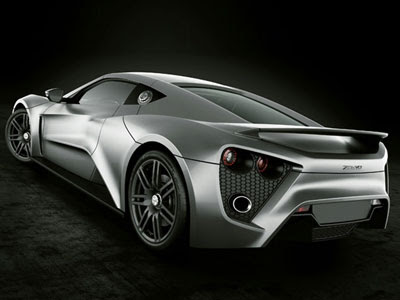
The theme of the front is repeated in the rear which is designed around the big diffuser necessary for high speed stability. As on the front the center volume is flanked by large air exits extracting hot engine air as well as housing the exhaust and rear lights.
The rear spoiler mandatory for a car capable of extreme high speeds is partly integrated in the rear wing. It has a unique aerodynamic design following the raked shape of the rear end.

Related Posts Plugin for WordPress, Blogger...